

Live dealer casinos bring real table games to your screen by combining physical gaming equipment, trained dealers, and streaming technology. You watch actual cards being dealt and roulette wheels spinning in real time while placing bets from your computer or phone. Live dealer platforms use high-definition cameras, optical character recognition (OCR) sensors, and specialized software to capture physical gameplay and translate it into data your device can process instantly.
The technology runs quietly in the background while you focus on the game. Studios set up professional gaming tables with multiple camera angles that stream directly to you. The dealer works at a real table with real cards and chips, but OCR technology reads each card and game outcome to update your screen and account automatically.
Understanding how these systems work helps you see what makes live dealer games different from standard online casino games. The setup requires specific equipment, reliable streaming infrastructure, and security measures to keep gameplay fair and your information protected.
Core Technology Behind Live Dealer Casinos
Live dealer casinos rely on three main technologies: high-definition video streaming that connects you to real casino tables, optical character recognition that reads game results, and interactive software that lets you place bets and chat with dealers.
Live Streaming Infrastructure
Multiple cameras capture every angle of the gaming table in real time. Studios typically use at least three cameras per table to show wide shots, close-ups of cards or wheels, and overhead views. These cameras stream video in HD or 4K quality through dedicated servers.
The streaming technology uses adaptive bitrate encoding. This means the video quality adjusts based on your internet connection speed. If your connection slows down, the stream automatically switches to a lower quality to prevent buffering.
Low latency is critical for live games. Most platforms keep the delay between the studio and your screen under two seconds. This happens through specialized streaming protocols that prioritize speed over perfect video quality. Without low latency, you couldn’t make betting decisions at the right time.
Optical Character Recognition (OCR)
OCR sensors scan physical game elements and convert them into digital data. Small cameras read cards as dealers reveal them, track where the roulette ball lands, and monitor dice results. The system identifies suits, numbers, and outcomes instantly.
This technology bridges the gap between the physical table and your digital interface. When a dealer flips a card, OCR reads it and displays the result on your screen within milliseconds. You don’t have to rely on the dealer to input results manually.
The accuracy rate of casino OCR systems exceeds 99%. Sensors use high-contrast cards and specialized lighting to ensure reliable reads. If the system can’t read a result, the dealer manually enters it as a backup.
User Interface and Real-Time Interaction
Your game interface shows the live video feed, betting options, chip denominations, and game history. You place bets by clicking or tapping virtual chips onto the betting area. The software tracks your balance and validates bets before each round closes.
Chat functions let you communicate with dealers and sometimes other players. Dealers have monitors showing player messages and can respond verbally. The interface also displays game statistics like hot and cold numbers in roulette or card counts in blackjack.
Backend systems process thousands of simultaneous bets across multiple tables. When you place a bet, the software records it, deducts chips from your balance, and queues it for the current game round. Results get calculated and payouts distributed automatically based on OCR data.
Studio Setup and Dealer Operations
Live dealer casinos operate from specially built studios that house professional equipment, trained dealers, and physical gaming tables. These controlled environments ensure consistent video quality, proper lighting, and authentic gameplay that streams to players in real time.
Professional Studio Environments
Live casino studios are purpose-built spaces designed for continuous broadcasting. These facilities contain multiple gaming tables, each equipped with cameras positioned at different angles to capture every aspect of gameplay. Professional lighting systems eliminate shadows and ensure clear visibility of cards, dice, and roulette wheels.
The studios maintain controlled temperature and sound levels to keep dealers comfortable during long shifts. Technical teams monitor broadcasts from control rooms, adjusting camera angles and audio levels as needed. Most studios feature themed backdrops and decor that match the specific game type, creating an atmosphere similar to land-based casinos.
Studio size varies based on operator scale. Smaller operations may run 3-5 tables, while larger providers operate facilities with dozens of tables running simultaneously. Each table requires dedicated space for cameras, lighting rigs, and the dealer’s monitoring equipment.
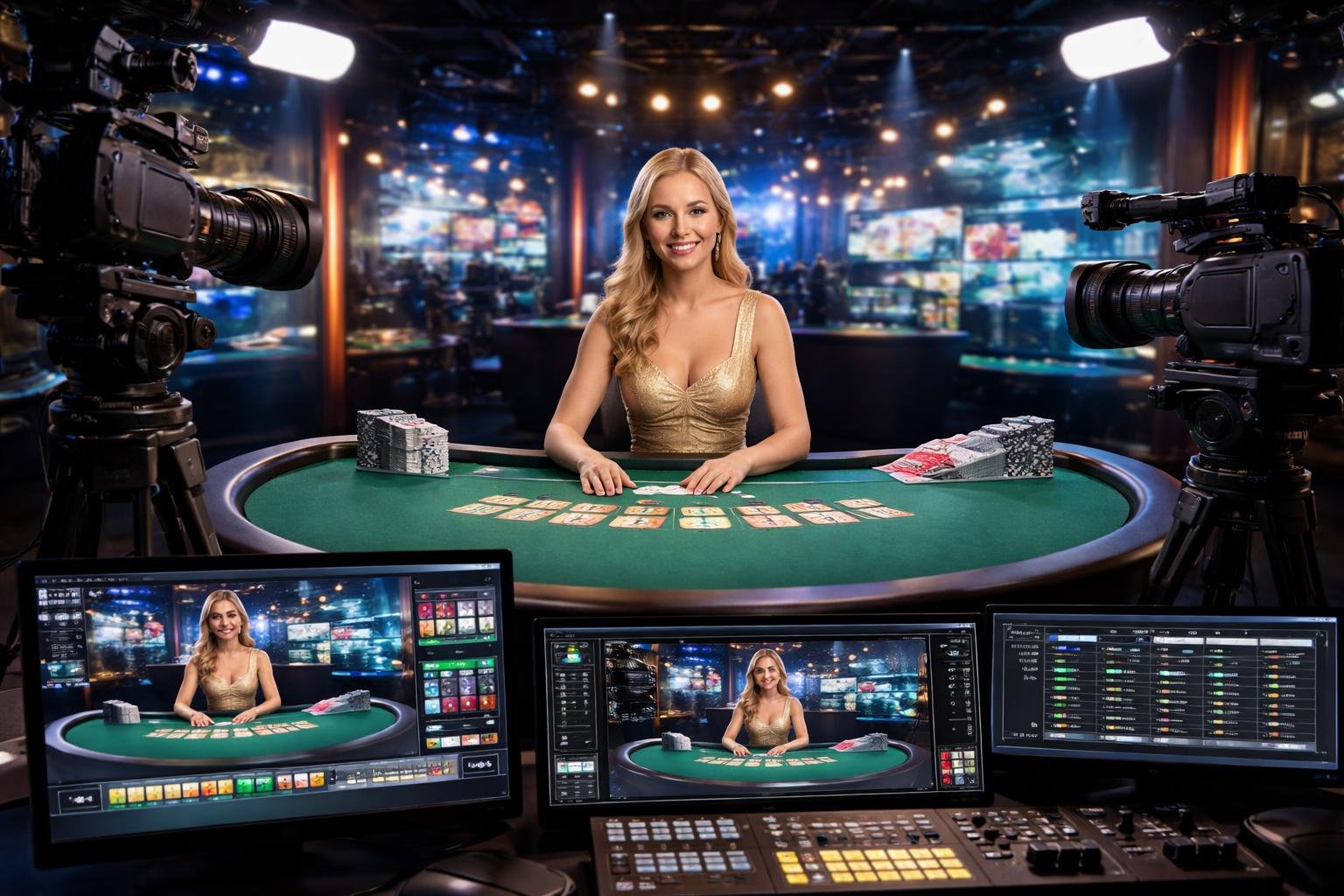
Role of Live Dealers
Dealers manage the physical gameplay while interacting with online players through chat systems. They receive training in both traditional casino dealing and the technical aspects of operating broadcast equipment. Your dealer can see your chat messages on monitors positioned around the table and often responds verbally during natural breaks in gameplay.
Each dealer works in scheduled shifts, typically lasting several hours with regular breaks. They shuffle cards, spin roulette wheels, roll dice, and announce results clearly for both the camera and remote players. Dealers also monitor their screens to track active players, handle technical issues, and maintain game pace.
Studios employ supervisors who oversee multiple tables, verify payouts, and step in when dealers need assistance or breaks.
Physical Gaming Equipment
Live casinos use regulation gaming equipment identical to what you’d find in traditional casinos. Cards, chips, roulette wheels, and dice meet industry standards for weight, size, and balance. Tables feature specialized surfaces with embedded sensors that read card values and chip placements.
Many studios use automatic card shufflers to speed up games and ensure randomness. Chip trays organize different denominations, and dealers use these physical chips even though your bets exist digitally. Roulette wheels undergo regular calibration to maintain fair spin results.
Standard Equipment Per Table:
- 6-8 decks of cards (blackjack)
- 300-500 chips for display
- Specialized gaming table with sensor technology
- Card shoe or automatic shuffler
- Discard rack
Game Integrity and Security Measures
Live dealer casinos use multiple layers of protection to ensure games remain fair and player data stays secure. These systems include physical monitoring of real dealers, digital encryption of all transactions, and regular third-party verification of game outcomes.
Random Number Generation and Fairness
Live dealer games don’t rely on random number generators like digital casino games. The outcomes come from physical actions—real cards being dealt, actual roulette wheels spinning, and genuine dice being rolled.
You can watch every action happen in real time through multiple camera angles. The dealers shuffle physical cards and spin real wheels that follow natural physics, not computer algorithms.
Computer vision technology monitors the game table constantly. Optical Character Recognition (OCR) reads the cards, dice, and wheel results instantly and converts them to digital data on your screen. This same technology detects misdeals and dealer errors automatically.
The cameras recording your game can’t be edited or manipulated during live play. What you see happening at the table is what determines your win or loss.
Encryption and Data Protection
Your personal information and betting data travel through 256-bit SSL encryption. This is the same security level banks use for online transactions.
Every action you take—placing bets, chatting with dealers, or withdrawing funds—gets encrypted before leaving your device. Only the casino’s secure servers can decode this information.
The streaming technology works one way. You see the dealer and table, but the dealer can’t access any of your personal data or account details. Your username appears on their screen, nothing more.
Independent Auditing Processes
Licensed live dealer casinos submit to regular audits from independent testing agencies. Companies like eCOGRA, iTech Labs, and GLI test the games and review operational procedures.
These auditors check that card shoes contain the correct number of cards, wheels aren’t biased, and the OCR technology reads results accurately. They verify shuffle procedures and examine hours of gameplay footage.
You can find audit certificates and RTP (return to player) percentages on licensed casino websites. These reports get updated quarterly or annually depending on the jurisdiction’s requirements.
Player Experience and Accessibility
Live dealer casinos adjust to different devices, connection speeds, and player preferences through adaptable streaming technology and customizable interfaces. Players can access games on smartphones, tablets, or computers while controlling video quality, chat functions, and table layouts to match their needs.
Device Compatibility and Streaming Quality
Live dealer games work on iOS and Android phones, tablets, desktop computers, and laptops without requiring downloads in most cases. Browser-based platforms use HTML5 technology to stream directly through Safari, Chrome, Firefox, and other standard browsers.
Stream quality automatically adjusts based on your internet connection speed. Most platforms offer manual controls to select video quality ranging from standard definition (480p) up to high definition (1080p) or 4K. Lower quality streams use less data and work better on slower connections, while HD streams provide sharper visuals but require faster internet speeds of at least 5-10 Mbps.
Mobile players can switch between portrait and landscape modes. The interface scales to fit smaller screens while keeping essential elements like betting controls, card displays, and chat visible.
Betting Interface Customization
You can adjust several interface elements to match your playing style. Volume controls let you mute or adjust dealer audio and game sounds independently. Chat windows can be minimized, expanded, or hidden completely if you prefer to focus only on gameplay.
Common customization options include:
- Camera angle selection (multiple views of the table)
- Bet history display on/off
- Game statistics and roadmap visibility
- Chip denomination quick-select buttons
- Tip jar access for dealer gratuities
Some platforms remember your preferences and apply them automatically when you return to play.
Multi-Table and Multilingual Support
Advanced players can open multiple game tables simultaneously in separate windows or tabs. This feature lets you play blackjack at one table while waiting for the next roulette spin at another, though it requires good internet bandwidth to stream multiple feeds.
Live dealer platforms staff multilingual dealers who speak English, Spanish, German, Italian, and other languages. You can filter games by dealer language in the lobby. Some tables use dealers who alternate between languages or provide multilingual chat support to serve international players in real-time.